School systems

Eurovac systems and equipment are domestic solutions, designed with the customer in mind, to meet the exact needs of our customers.

Our equipment is always manufactured and installed in accordance with the latest regulations and safety requirements,
such as ATEX and fire safety standards.

We also offer design support to make choosing the right equipment and piping a breeze. Contact us and together we will find the best solution for you!

Our range includes products and solutions such as:

  • Debris removal systems
  • Textile dust removal systems
  • Multifunctional dust removal systems
  • Other target extractors and blowers

For more information on the school destinations, please see our brochure, which you can download here.

Debris removal systems

A well-designed sawdust removal system is designed to remove chips and dust from woodworking machinery. That's why we use large-diameter piping to ensure sufficient airflow for planers and chippers, for example. Planes and chippers often have 150 mm discharge connections.

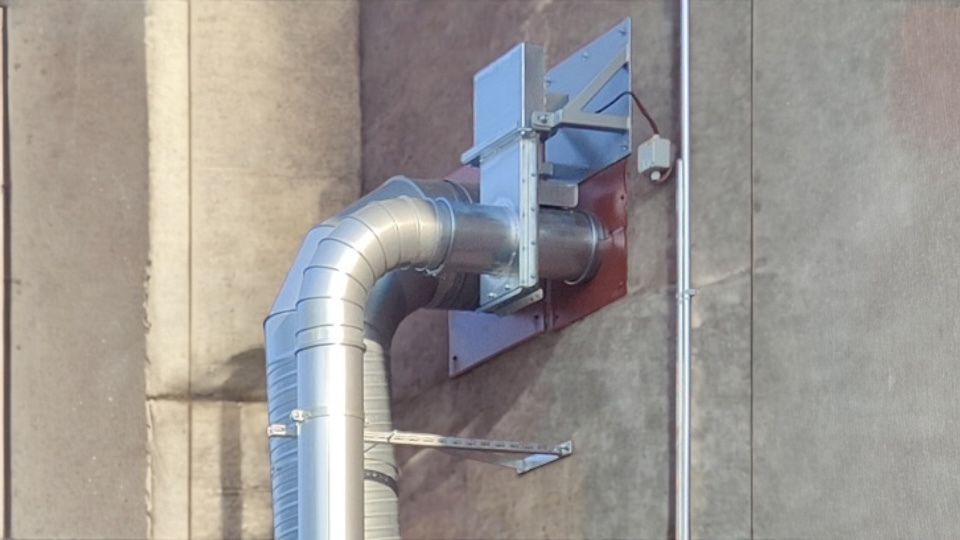
The pipelines are also equipped with an ATEX-certified back baffle, as well as a certified guillotine-type fire baffle even in dirty ducts.

The equipment is sized according to need and can be located outdoors or indoors. Recently, separate steel-framed equipment rooms or deconstruction containers have become more common. It is also possible to equip the installations with low-cost, low-maintenance fire extinguishing equipment to extinguish any fire immediately.

The units are equipped with HEPA13 after-filtration, allowing air to be returned to the working area. In this case, the vacuum in the rooms is equalised without the need for separate ventilation controls. There are also large energy savings by not blowing out warm air. This eliminates the need for separate auxiliary heaters and LTO equipment.

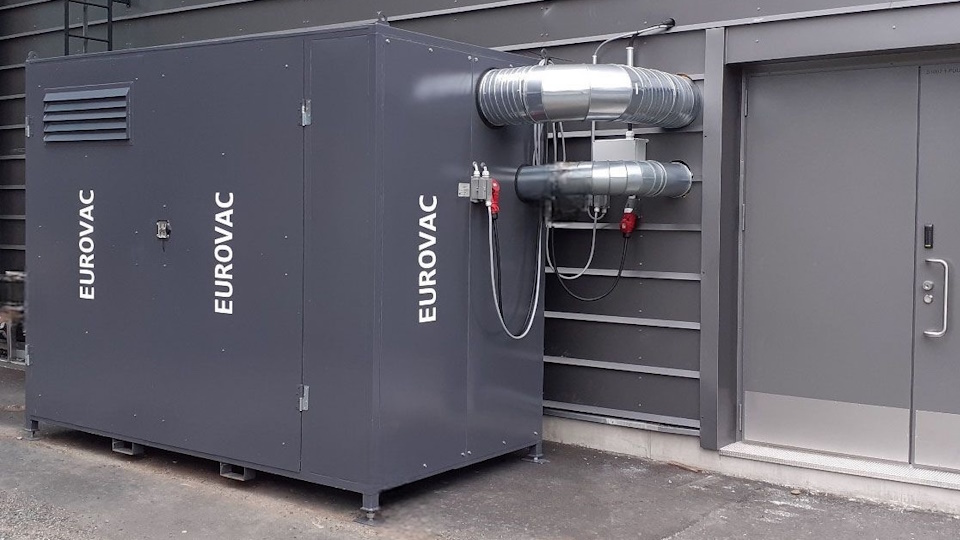
Ready-to-use sawdust removal solution for outdoor installation

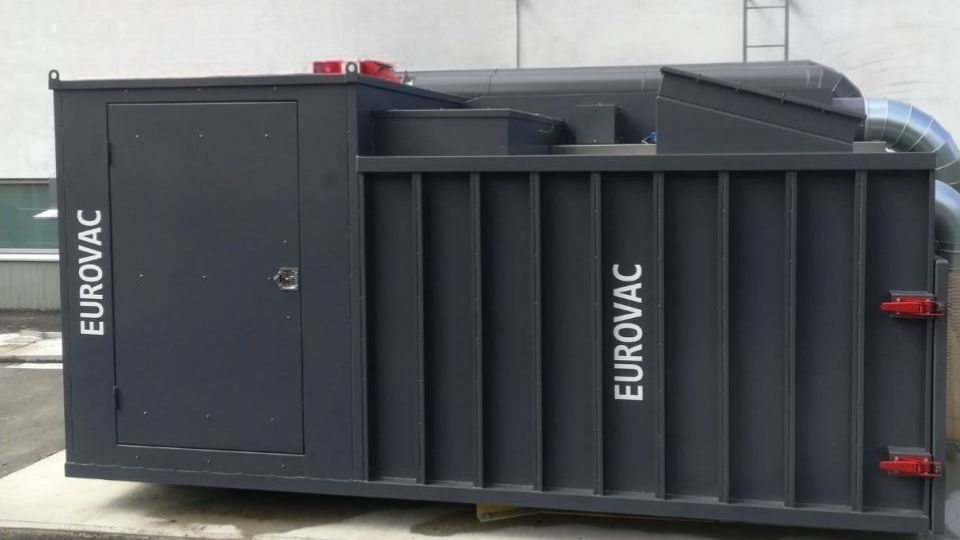
School sawdust removal room

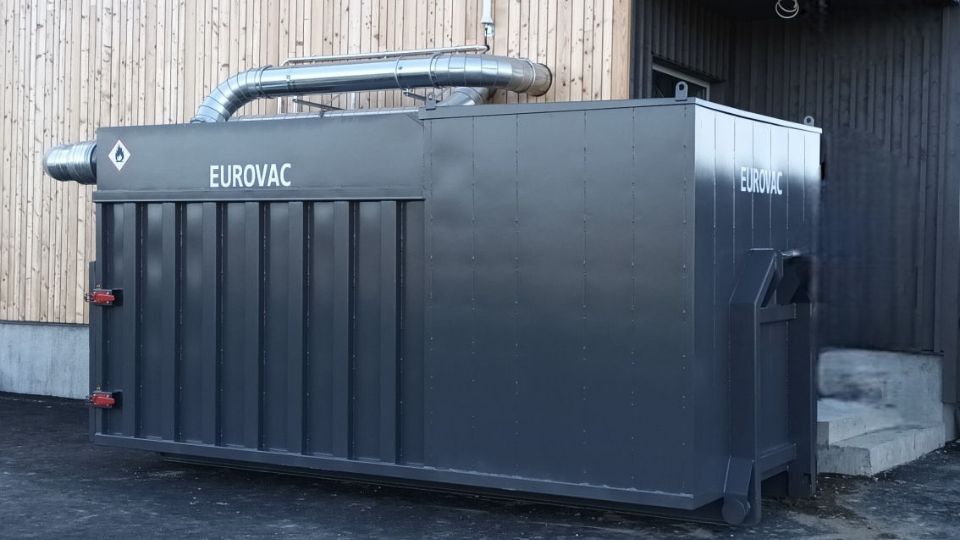
Sawdust removal equipment is installed in a soundproofed steel-framed equipment room, which can be located outdoors.

The Eurovac equipment room will be lifted to the site as a whole. It is also easy to move the equipment to another site if the situation changes. The discharge piping and electrical connections are connected to the room, and the equipment is ready for operation.

Inside the plant room, a deconstruction system and a main electrical control panel have been installed.

The equipment room is equipped with large lockable service doors and can be coated in the basic colour of the customer's choice.

A compact package for interior sawdust removal

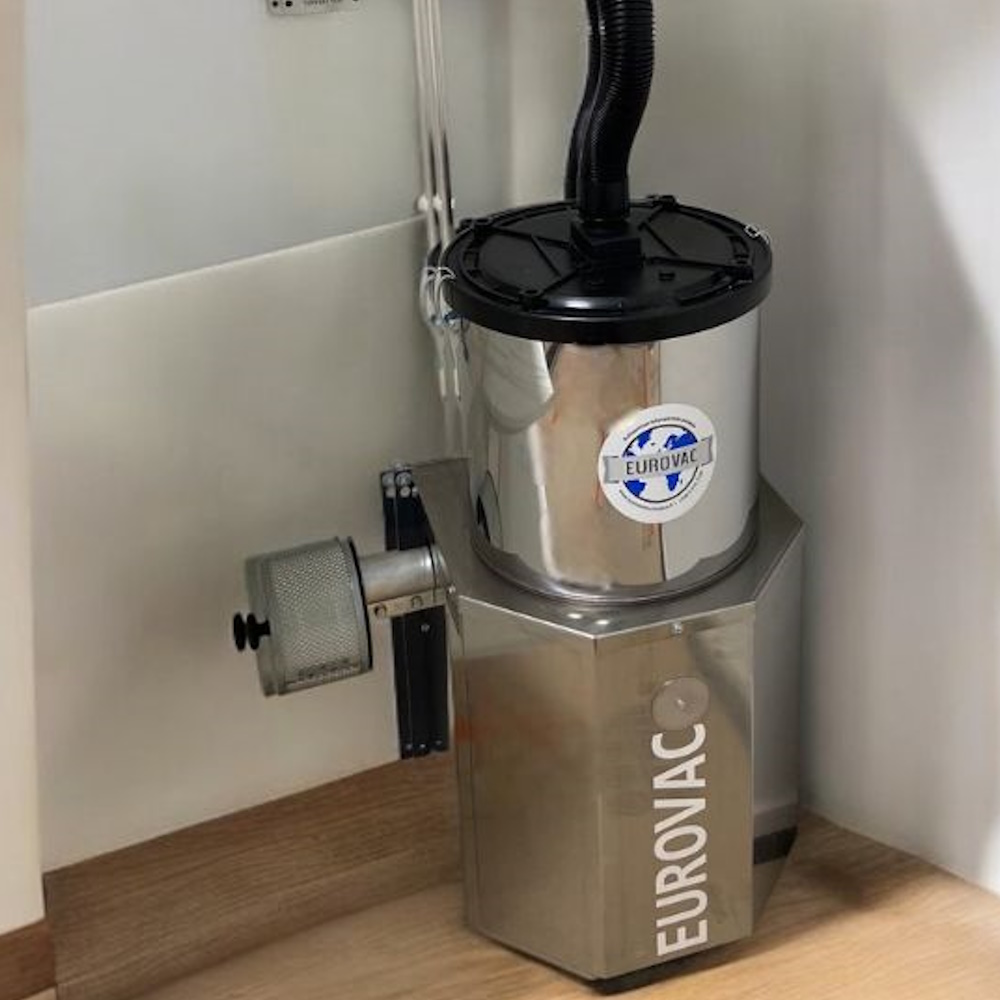
PUR8000 sawdust removal system

Product code: 008000

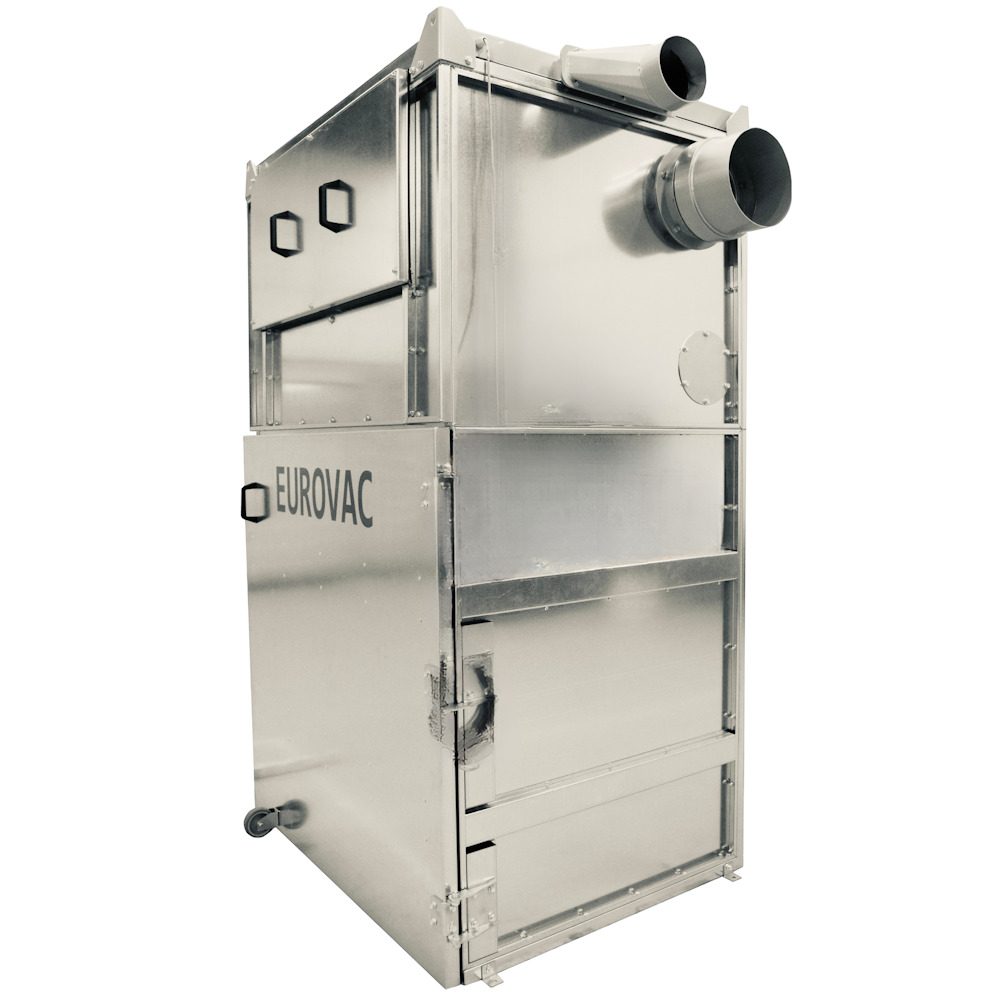
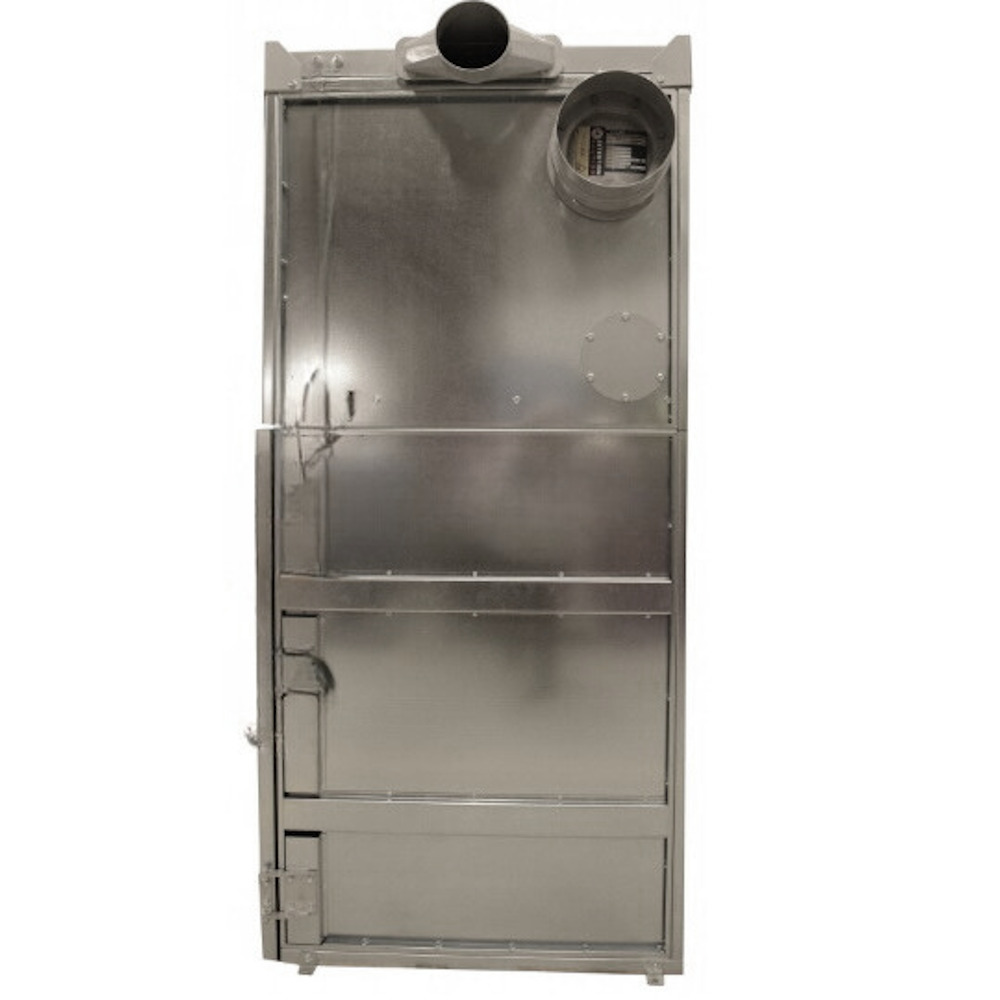
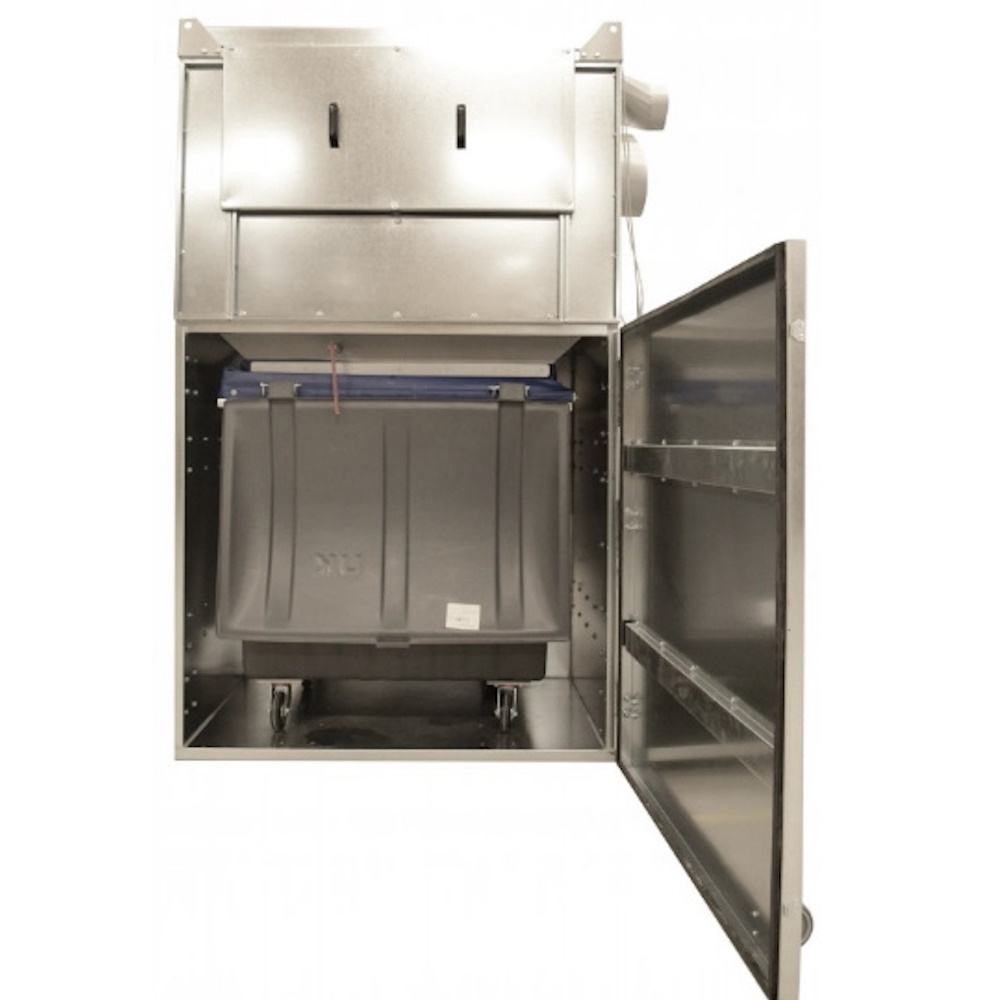
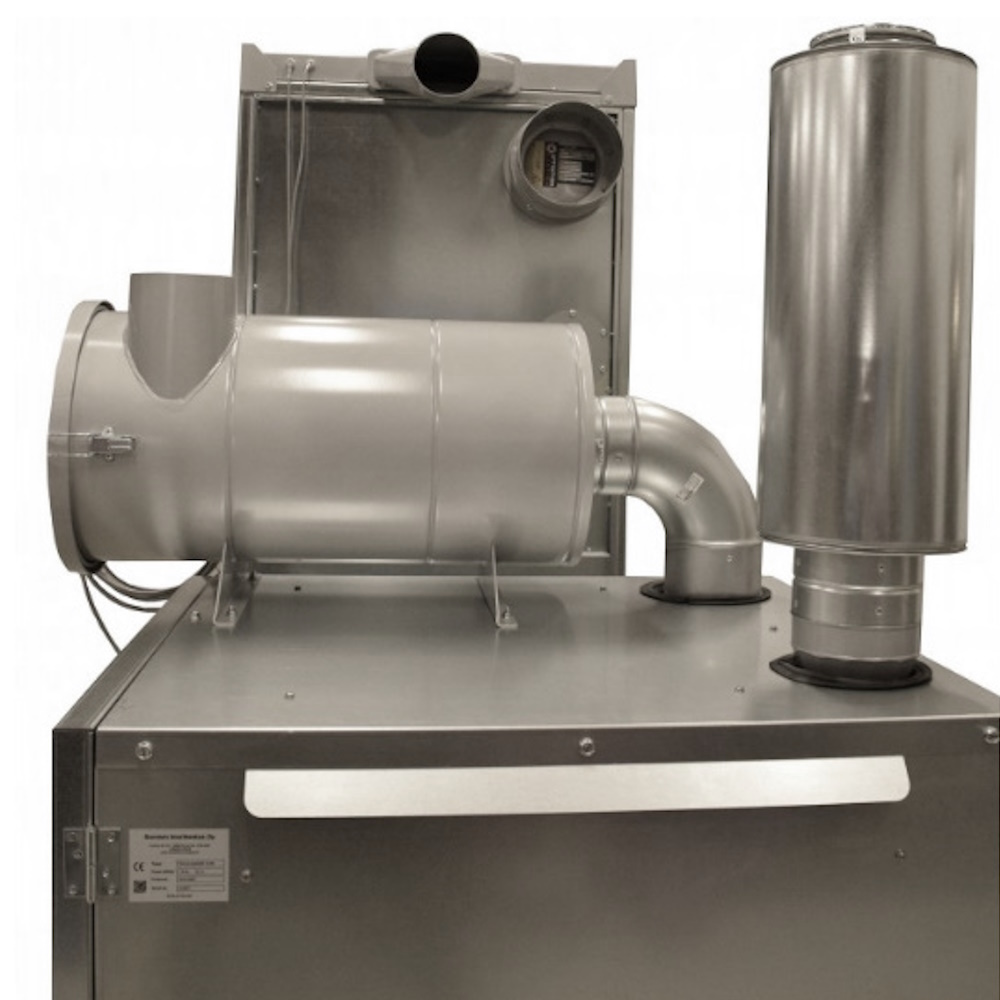
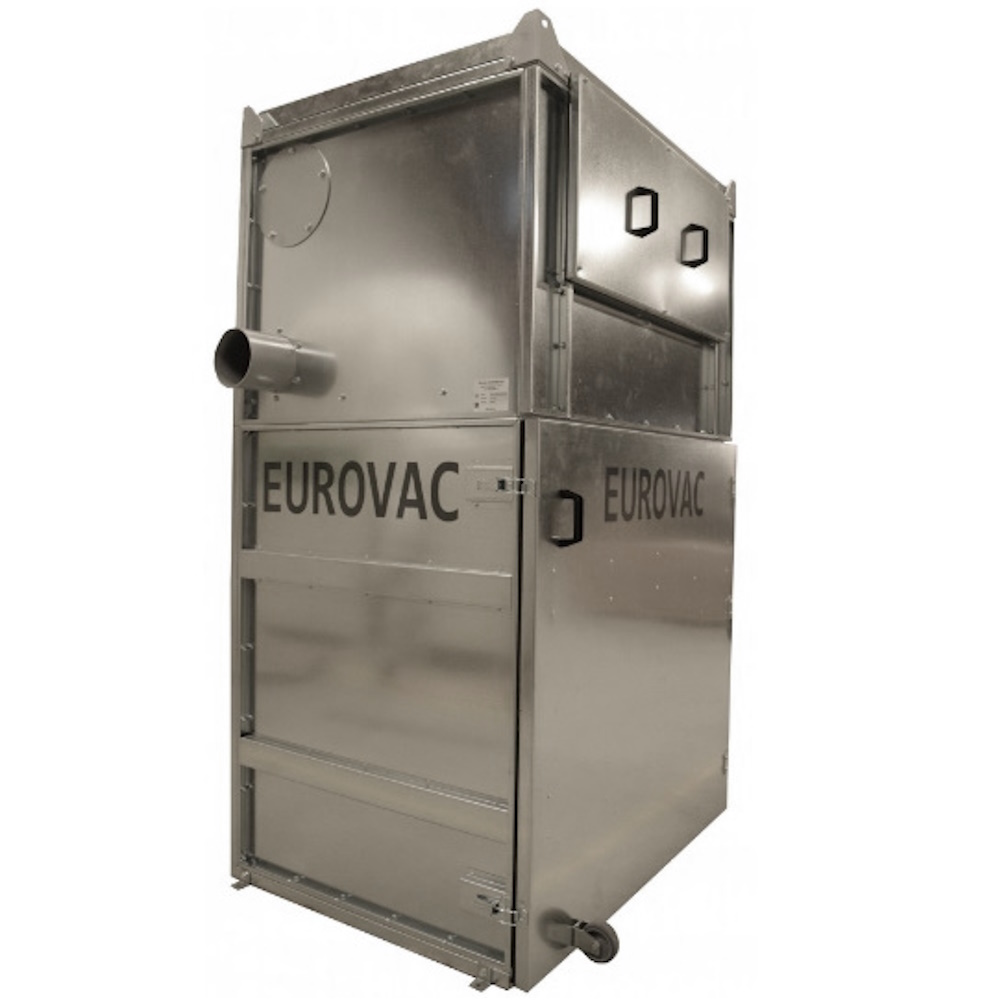
The PUR 8000 is an indoor unit that includes a blower, filter unit, dust tank, HEPA13 filter and electrical control panel. The equipment meets stringent safety requirements and is CE approved. The safety of operation is enhanced by the on-off switch and the power is controlled by a variable speed drive. The unit can be equipped with an automatic aerosol extinguishing system. HEPA13 filtration allows air to be returned to the working area, thus balancing the vacuum and saving energy.

Self-controlled system for outdoor use

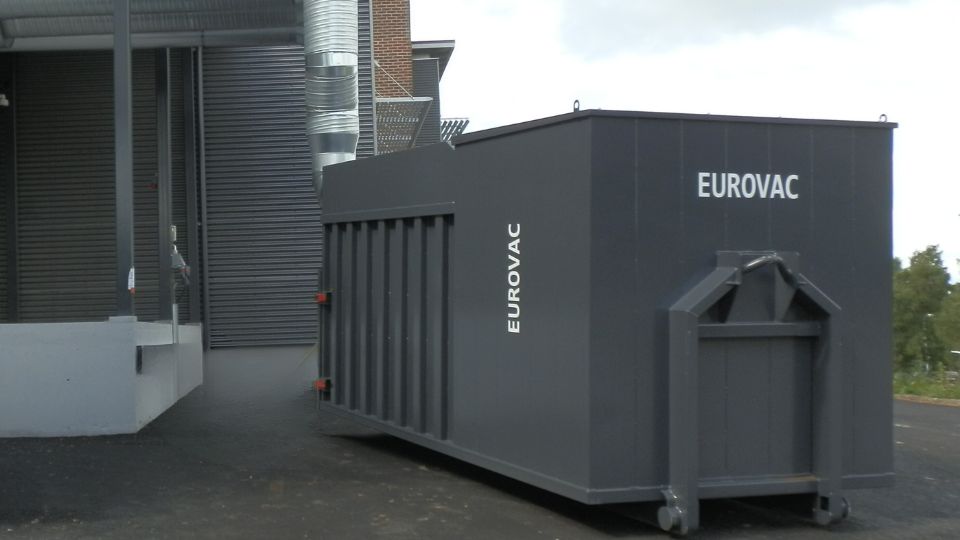
Sawdust removal container

Product code: 213327

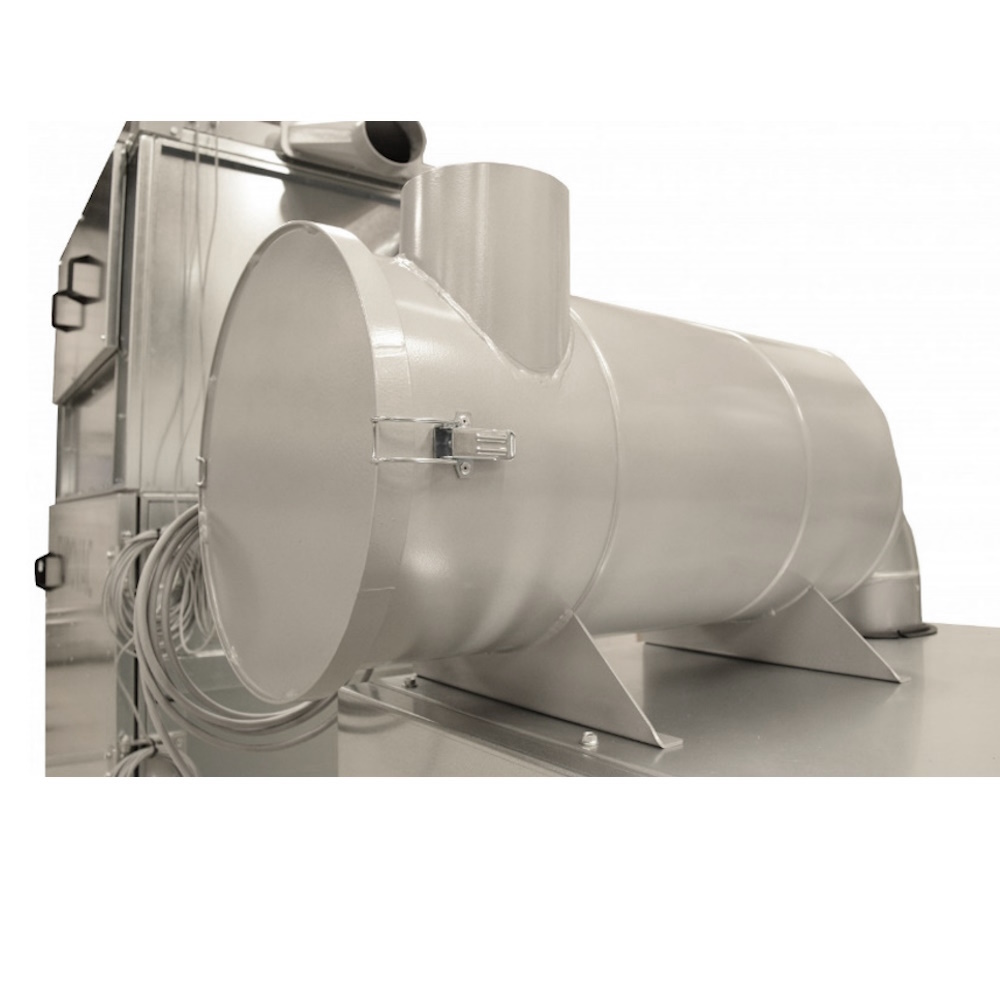
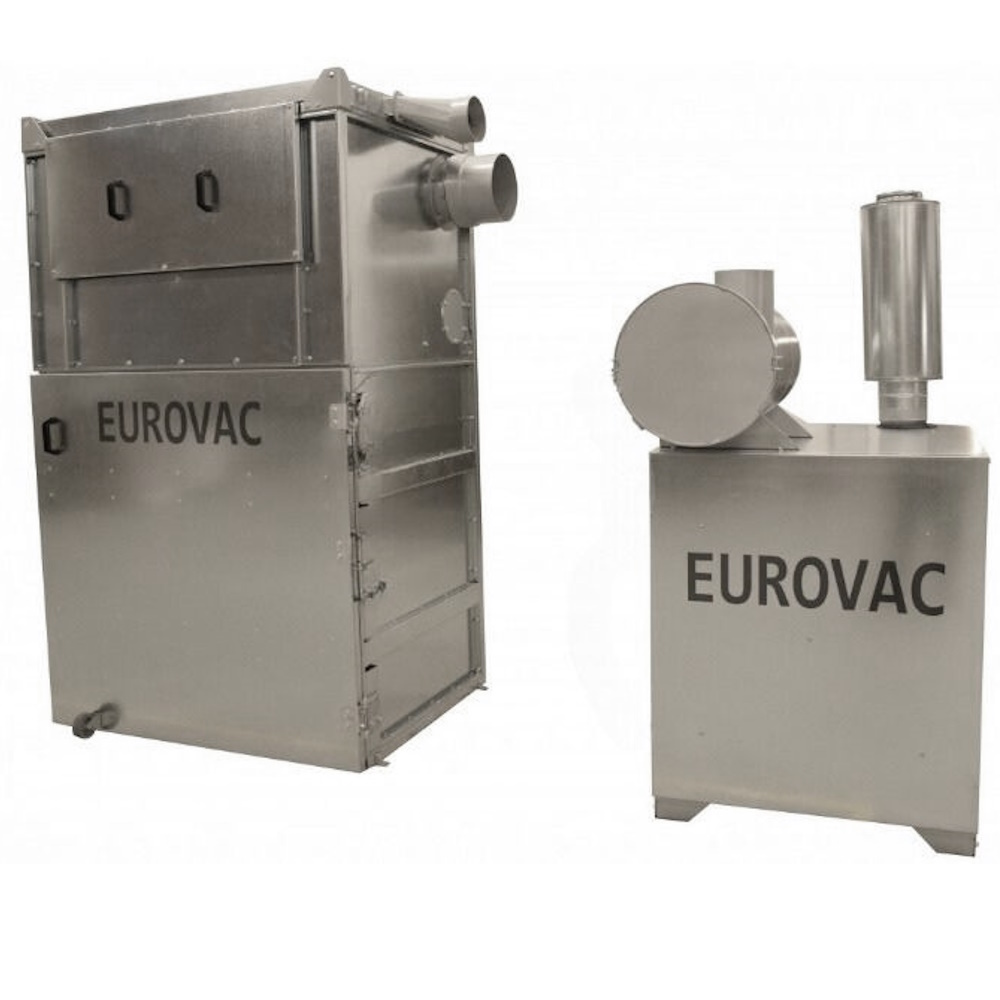
Complete sawdust removal system with sawdust chamber and filters as a separate part and in a separate engine room, silenced blower, air compressor and starter/control unit. The unit can be installed in new systems or to replace obsolete sawdust removal systems.

Does not require space inside buildings, the device is also fire/explosion proof. Used, for example, in schools. Thanks to the high-pressure fans, it can also be used for vacuuming. The suction unit is equipped with an automatic filter cleaning system, which allows efficient cleaning even during use.

Call and ask more.

Textile dust extraction

A central vacuum cleaner system installed in the textile room can be equipped with dust extractors for vacuum cleaners and cleaning points for general cleaning.

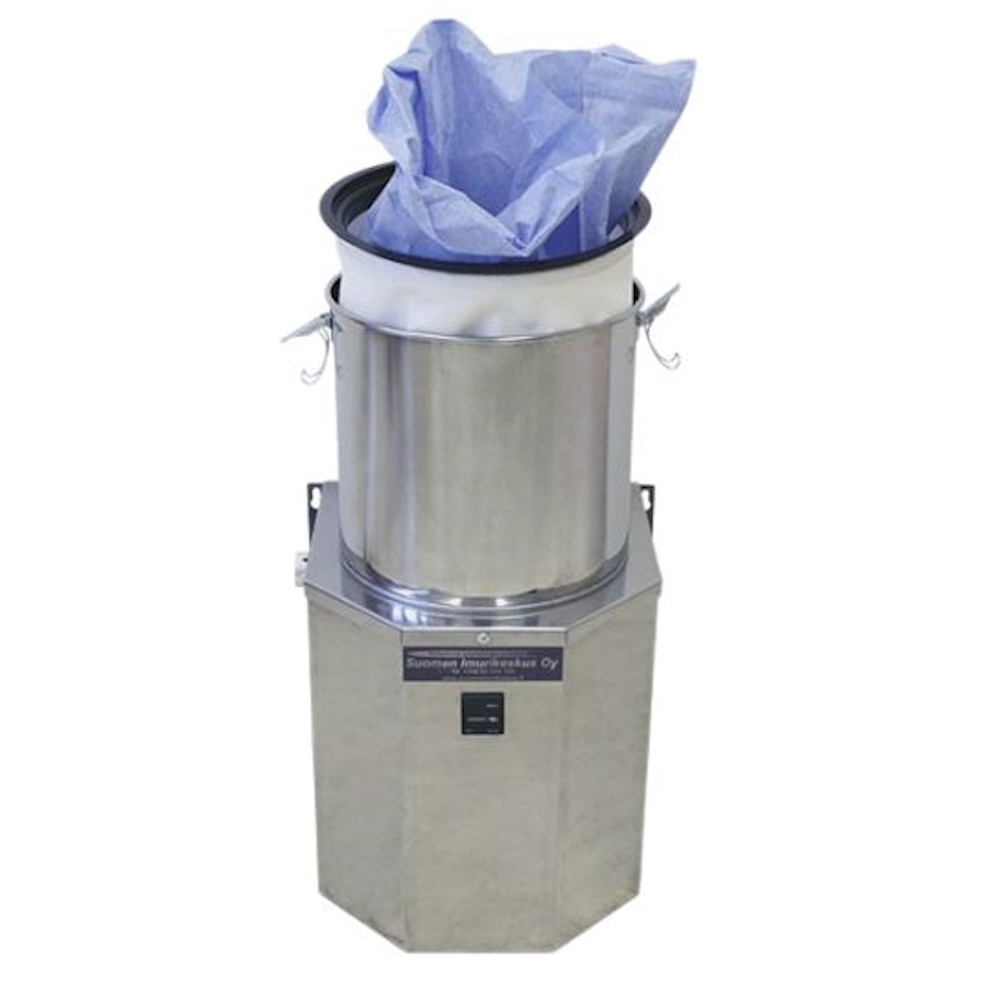
Quiet and durable central vacuum cleaner for demanding applications

Center 3010 TS Tex

At the heart of the new generation Center TS central vacuum unit is a turbine-driven suction engine with a power and lifetime that is in a class of its own compared to conventional central vacuums with carbon brush motors. Thanks to the turbine suction engine, the Center TS is also extremely quiet. This allows the unit to be installed close to living areas. The suction motor of the Center TS central vacuum unit has a lifetime of at least 15 000 vacuuming hours.

For more information:

  • Power: 3000 W
  • Tank: 40 l
  • Underpressure: 270 mbar
  • Air flow: 5800 l/min
  • Sound level: 68 dB
  • Weight: 45 kg
  • Power supply 400V 16 A
  • Dimensions: H 930 mm W 520 mm D 480mm

Multifunction dust extraction

In schools, spaces for a wide range of crafts, such as small metal and woodwork and soldering, are becoming more common.

These premises cannot be equipped with a traditional sawdust removal system, but must be
a dedicated, appropriate system is required for cleaning and air quality management.

As a solution, a multifunctional dust extraction station can be installed, offering several functions combined:

  • Vacuum point for efficient removal of dust and particles
  • Solvent gas exhaust point for safe working
  • Electrical sockets for the use of tools

The sizing and design of the equipment is always based on space and needs,
to ensure optimum functionality and safety.

Multifunctional dust extraction

Filter unit 82L with HEPA13 return air filter, Suction unit with high pressure centrifugal fan.

Other target extractors and blowers

We also offer welding fume extraction points, separate soldering fume extraction equipment, fans for hot and explosive gases, grinding tables and painting cabinets.

We have a wide range of different types of target exhaust fans, as well as equipment for soldering iron removal, and also painting walls and sanding tables.

Eurovac Reintec Easy

Reintdeck Easy is designed to provide effective air purification, making it a great choice for improving indoor air quality. This unit is designed to be easy to use and practical. The Reintdeck Easy has a very durable and high quality construction and features a 30 mm soundproof aluminium profile.

The filters are mounted on perforated side panels with handles and a mounting system, making maintenance and filter replacement very easy. In addition, all Reintdeck air purifiers are equipped with a main control panel located on one side of the structure.

Centrifugal fans

Target removal suction arms

Local exhaust arms for removing soldering fumes

Effective local exhaust ventilation for workstations
Gases, vapors, and fine particles generated during soldering must be removed directly at the source before they spread into the workspace. Local exhaust extraction arms provide an effective and ergonomic solution for workstation-specific air purification. When local exhaust ventilation is applied directly at the source, the air quality in the work environment improves significantly and employee exposure to harmful substances is reduced.
Probis/A extraction arms are particularly suitable for soldering work in the electronics industry, laboratories, educational institutions, and small-scale industrial soldering and welding applications. The flexible design allows for precise positioning of the extraction nozzle at the workstation.

Benefits of a spot extraction arm

  • Removes soldering fumes, vapors, and fine particles directly at the source
  • Improves air quality and workplace safety
  • 360° swivel and easily adjustable design
  • Available in 2- and 3-tier models
  • Suitable for wall or tabletop mounting
  • Can be connected to a filtration unit or a central exhaust system

The suction arm can be equipped with various suction hoods and accessories depending on the application.

Available accessories

  • Table and wall mounts
  • Round and rectangular exhaust hoods
  • Lighted exhaust hoods
  • Airflow control damper
  • Connectors and suction hoses
  • Transformers and clear protective covers

Local exhaust extraction arms can be connected directly to F-series filtration units or centralized local exhaust systems, providing an efficient and flexible solution for the removal of soldering fumes and workstation-specific air purification.

OLISMOKE – a compact workstation-specific solution

Effective filtration of soldering fumes and fine particles
OLISMOKE is a compact soldering fume extraction unit designed for the effective removal of soldering fumes and fine particles at a single workstation. The unit is particularly suitable for workstations requiring a local, easy-to-install air purification solution.

The unit can be connected directly to a spot extraction arm or extraction nozzle, allowing gases and fumes generated during soldering to be extracted directly at the source before they spread into the workspace.

OLISMOKE is particularly well-suited for soldering work in the electronics industry, as well as for use in laboratories, educational institutions, and maintenance and assembly workstations.

Benefits of the OLISMOKE soldering unit

  • Compact and space-saving design
  • Effective filtration of soldering fumes and fine particles
  • Suitable for a single workstation
  • Easy to install and use
  • Quiet and energy-efficient operation
  • Compatible with spot extraction hoses

Multi-stage filtration

The OLISMOKE unit uses an efficient multi-stage filtration system that ensures clean air in the workspace:

  1. The pre-filter removes larger particles
  2. The intermediate filter collects finer dust
  3. The HEPA filter removes extremely small particles
  4. The activated carbon filter absorbs gases and odors

Typical applications

  • Electronics Soldering
  • Electronics maintenance and repair services
  • Laboratory work
  • Soldering stations in educational institutions
  • Assembly work in small-scale manufacturing

Soldering units

An effective solution for filtering soldering fumes and fine particles.

Gases, vapors, and fine particles generated during soldering can degrade the air quality in the work environment and expose workers to harmful substances. Soldering fume extraction units are designed to effectively remove and filter contaminants generated during the soldering process directly from the workstation.

The F-series soldering fume extraction units are particularly well-suited for use in electronics manufacturing, assembly lines, laboratories, and soldering stations at educational institutions. The units can be connected to one or more local exhaust arms, ensuring efficient and reliable air purification at each workstation.

Advantages of a soldering unit

  • Effectively removes soldering fumes, vapors, and fine particles
  • Multi-stage filtration ensures clean exhaust air
  • Suitable for one or more workstations
  • Quiet and energy-efficient operation
  • Easy to maintain and replace filters
  • Can be connected to local exhaust arms and ductwork

Multi-stage filtration
Soldering fume extraction units use multi-stage filtration to ensure effective air purification:

  1. The pre-filter removes larger particles
  2. The intermediate filter collects finer dust
  3. The HEPA H13 filter removes extremely fine particles
  4. The activated carbon filter absorbs gases and odors

Thanks to this multi-stage filtration system, the air in the workspace remains cleaner and safer.

Typical applications

  • Soldering in the electronics industry
  • Assembly and production lines
  • Laboratories and research environments
  • Soldering stations in educational institutions
  • Soldering and repair work for small-scale manufacturing

Welding smoke suction arms

Eurovac H 1500 vacuum cleaner

The Eurovac H 1500 dust extractor is designed for continuous use with machine tools, which can be operated up to 24h/day.

For example, for sharpening dust from skates.
Can also be equipped with HEPA13 after-filtration.

Fuse rating 16 A / 240 V.
Dimensions H 820 W 400 L 750 mm, power cable 8 m

Fire dampers

Fire dampers for chip extraction pipelines

Gravity-closing, fuse-actuated fire dampers provide reliable fire protection and unobstructed airflow in ducts where material or dust is being transported. The certified (EN1366-2 / EN13501-3) fire dampers are suitable for both vertical and horizontal ducts and are easy to maintain thanks to the opening bottom surface. Also available in ATEX models.

A certificate of conformity and instructions for use are supplied with each panel.

Survey on school and educational institution systems

Dust extraction systems in schools must meet the safety requirements of the application, such as those related to dust control, fire safety, and potential ATEX risks. In woodworking shops in particular, it is important that the system is properly sized, regularly maintained, and that inspections and maintenance related to its use are documented.
The appropriate system is selected based on the school’s equipment, layout, air volume requirements, and noise control needs. Some sites will be equipped with a separate equipment room or a container solution, while others will use a filter unit installed indoors. The choice is made based on the amount of sawdust and dust generated, the number of machines that may be in use at the same time, and the safety requirements at the site.
The cost of a school’s dust extraction system includes design, equipment, piping, installation, and commissioning. An exact price cannot be provided without a site-specific assessment. To request a quote, please provide details about the facility, equipment, any potential expansion needs, and whether the unit is to be installed indoors or in a separate equipment room or container.
Placing a dust extraction container or equipment room outdoors reduces noise in classrooms and facilitates maintenance, as the actual equipment is separated from the workspace. In addition, equipment installed outdoors saves indoor space and eliminates the need for fire compartmentalization of the equipment room. Equipment installed indoors is a good solution if outdoor space is not available. The appropriate solution depends on the space, budget, and practical operating conditions.
Yes, in many cases, an existing system can be modernized or expanded. First, we assess the condition of the current system, including airflow rates, filtration, safety systems, and piping. After that, the necessary modifications can be planned, such as connections for new equipment, expansion of the piping, or upgrades to the filter unit and safety systems.
Suomen Imurikeskus provides maintenance, spare parts, and technical support for its systems. It is advisable to check the availability and details of the maintenance contract directly during the quotation phase so that it can be tailored to the school’s usage patterns and the size of the equipment. Generally speaking, a maintenance contract is available and recommended. Regular maintenance ensures high equipment availability.
Woodworking in schools requires a system capable of effectively removing both sawdust and fine dust from the machines and workstations that are in use at the same time. The sizing is based on the air volume recommendations typically provided by machine manufacturers, the size of the space, the ductwork layout, and how many dampers or intake points can be open at the same time. In other words, how many machines need to be used simultaneously.
Maintenance includes regular inspection of the system, cleaning or replacing filters, monitoring the condition of the piping and dampers, and inspecting safety components. The maintenance interval depends on the frequency of use and the amount of dust. In practice, good maintenance extends the system’s service life and helps keep dust removal safe and efficient.
The noise level depends on the system’s power, location, soundproofing, and whether the equipment is located outside the classroom. In a school environment, noise should be taken into account during the planning phase, which is why the equipment is often placed in a separate equipment room or container if the goal is to create the quietest possible learning environment.
HEPA13 filtration is not in itself an energy-saving feature, but rather a filtration level. Energy efficiency is primarily influenced by air volumes, fan efficiency, operating times, pressure drops, and any air recirculation. Therefore, energy savings must be assessed on a case-by-case basis. Generally speaking, with equipment equipped with efficient filtration, air can be recirculated, resulting in even better efficiency than with heat recovery. The Finnish Vacuum Center has third-party research data on this.
In school woodworking shops, the system is designed according to the site’s safety requirements. If necessary, the piping can be equipped with backflow and fire dampers, and the system is implemented in a way that takes into account the control of dust, sparks, and potential fire hazards. In addition, the system can be equipped with, for example, a spark detector and/or a fire suppression system. The final solutions are always determined based on the specific application.
Recirculation of exhaust air may be possible if filtration, safety requirements, and the risks associated with the application permit it. This must be evaluated on a case-by-case basis, especially when dealing with fine dust or if the site has fire safety or ATEX requirements. When implemented correctly, air recirculation can reduce the need for heating energy, but the effectiveness of the solution depends on the specific site.
Operating costs are particularly affected by the need to replace filters, the fan’s electricity consumption, and maintenance work. The service life of filters depends on the amount of dust, operating time, and system sizing, so it is not advisable to specify a single fixed replacement interval for all applications. In practice, the condition of the filters is monitored regularly, and they are replaced when pressure drop, operating time, or the manufacturer’s instructions require it.
Dust extraction systems are designed for the sawdust and dust generated during woodworking, whereas in textile applications, the system is sized to handle finer dust, threads, and fiber residues from sources such as sewing machines and sergers.